About Dr. Tajuddeen A. Williams, PhD
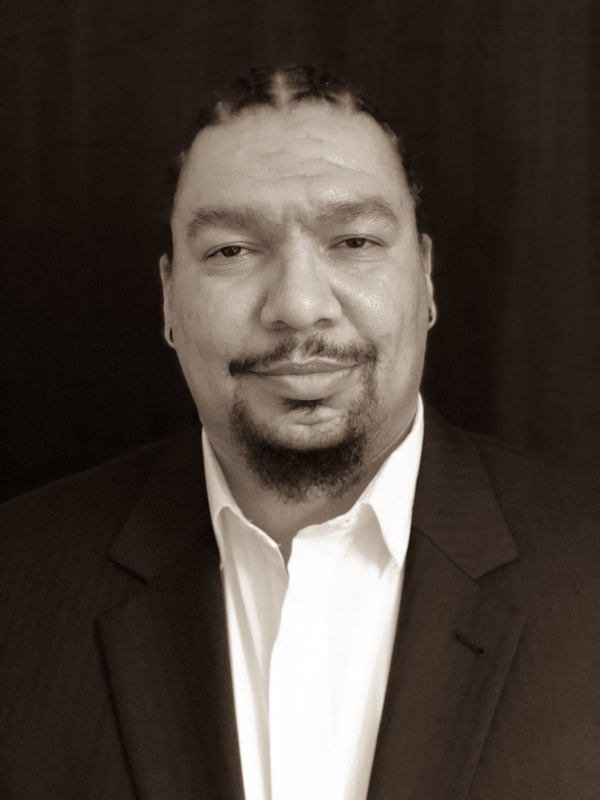
Dr. Tajuddeen Abdul-Malik Williams is a software engineering leader, social psychologist, educator, and mental health advocate whose work spans technology, research, community health, and culturally responsive education. His career brings together more than twenty-five years of software engineering experience with a deep scholarly and lived understanding of mental health, identity, and social systems. His work emphasizes ethical design, accessibility, and the creation of systems that serve people rather than the other way around.
Academic and Research Foundations
Dr. Williams earned his PhD in Psychology from Walden University, where his research examined how populist attitudes, religious identity, and locus of control predict climate change denial. His work contributes to social psychological understanding of how belief systems form and how they influence public trust in science and shared decision-making. This research reflects broader commitments to public health communication and the sociology of knowledge.
He also holds master’s and bachelor’s degrees in Social Psychology, as well as additional academic training in Information Technology (Strayer University and University of the People), Music (Howard University), and American Sign Language (Gallaudet University).
University-Level Teaching and Scholarship
Dr. Williams serves as Volunteer Faculty (Adjunct Instructor) at the University of the People, a global, tuition-free university committed to expanding access to higher education. He teaches psychology and applied social sciences, providing instruction, mentorship, and evaluation aligned with international online-learning standards.
Beyond institutional teaching, he has created widely enrolling public courses, including Roots of Racism: Bias, Prejudice, and Systemic Oppression and Movements That Matter: The Psychology of Resistance. These courses have reached more than 800 learners worldwide through Google Classroom, TikTok, and YouTube.
His teaching approach is relational, student-centered, and grounded in reflective conversation. He emphasizes cultural context, narrative meaning, and applied critical thinking rather than passive memorization.
Leadership in Software Engineering
Across his engineering career, Dr. Williams has led global development teams, modernized enterprise systems, delivered broad accessibility initiatives, and developed organization-wide standards for architecture, DevOps, design systems, inclusive development, and cross-functional collaboration.
His leadership experience includes TD SYNNEX, Booz Allen Hamilton, the American Psychological Association, and multiple federal science and public service agencies, including NASA, FDA, the Department of State, the U.S. Courts, and the Air National Guard.
Technical focus areas include:
- Front-end architecture and component systems
- Accessibility compliance (WCAG, Section 508, ADA)
- Modern JavaScript environments (React, TypeScript, Next.js)
- Cloud architecture and DevOps practices
- Scalable software and product design for enterprise environments
He is recognized for integrating technical rigor with community-centered design thinking.
Founder and Product Strategist
Dr. Williams is the founder and chief architect of WorkPage, a professional networking and hiring platform that prioritizes authenticity, equity, and belonging. WorkPage includes:
- Impart – an applicant tracking system built to reduce structural hiring bias
- Voca – a narrative-based resume and professional identity tool
- Verity – a system for transparent recruiter accountability and fair evaluation
WorkPage reimagines professional identity not as self-promotion, but as meaningful connection and recognition.
Mental Health Advocacy and Public Education
For more than seventeen years, Dr. Williams has served with the National Alliance on Mental Illness (NAMI) as an educator, facilitator, trainer, and public speaker. He trains new facilitators statewide, teaches the evidence-based Family-to-Family program, and presents on caregiving, resilience, stigma reduction, and culturally informed mental health practice.
His advocacy is shaped by lived experience as both the child of a parent with severe mental illness and the parent of neurodiverse children. This personal grounding informs his teaching, speaking, and community support with clarity and compassion.
Dr. Williams also serves with the Maryland Food Bank Speakers Bureau, addressing how food insecurity, chronic scarcity, and environmental stress influence mental health outcomes and community resilience.
AI, Data, and Responsible Technology
Dr. Williams works at the intersection of artificial intelligence, human learning, and ethical digital systems. His approach centers the social and psychological dimensions of AI, with a focus on how algorithms influence identity formation, public trust, and access to opportunity.
In his software leadership roles, he has guided organizations through responsible AI adoption, including evaluation of generative AI capabilities, workflow integration, and clear governance frameworks. This work includes training engineering teams on prompt engineering, code generation review, data reasoning, model output validation, and human-in-the-loop safeguards to ensure that AI augments rather than replaces professional judgment.
His perspective on AI is informed by his background in social psychology, particularly in how individuals interpret information, form beliefs, and respond to institutional authority. He examines how algorithmic decision systems can either reinforce or reduce structural inequities, and he emphasizes transparency, auditability, and interpretability in the design and deployment of data-driven systems.
Dr. Williams supports teams, educators, and community organizations in developing AI strategies that are technically sound and socially grounded, prioritizing dignity, clarity, and the ethical use of emerging technologies.
Board Leadership and Community Work
Dr. Williams serves as a Steering Committee Member for NAMI Cecil County. His work supports digital strategy, accreditation planning, and the development of community-based and culturally rooted mental health training pathways.
Additional service includes:
- Maryland Medical Reserve Corps, Volunteer Social Scientist
- Global Mentorship Initiative, Career and Leadership Mentor
- Public speaking, policy engagement, and organizational training across universities, hospitals, corporations, and community settings
A Practice Rooted in Humanity and Stewardship
Dr. Williams lives on a working farm where he raises chickens, cultivates food, and tends to a pond of bass and koi, accompanied by two Great Pyrenees guardians, Wolf and Bear. The rhythm of that environment informs his philosophy of leadership: growth is relational, care is a sustained practice, and community is built through presence, not performance.
He welcomes collaboration with educators, organizers, technologists, researchers, faith communities, and civic leaders who are working to build systems rooted in dignity, accountability, and human flourishing.
Note on Name:
Dr. Williams previously published and appeared professionally under the name Ryan R. Williams. Some earlier work may still appear under that name.